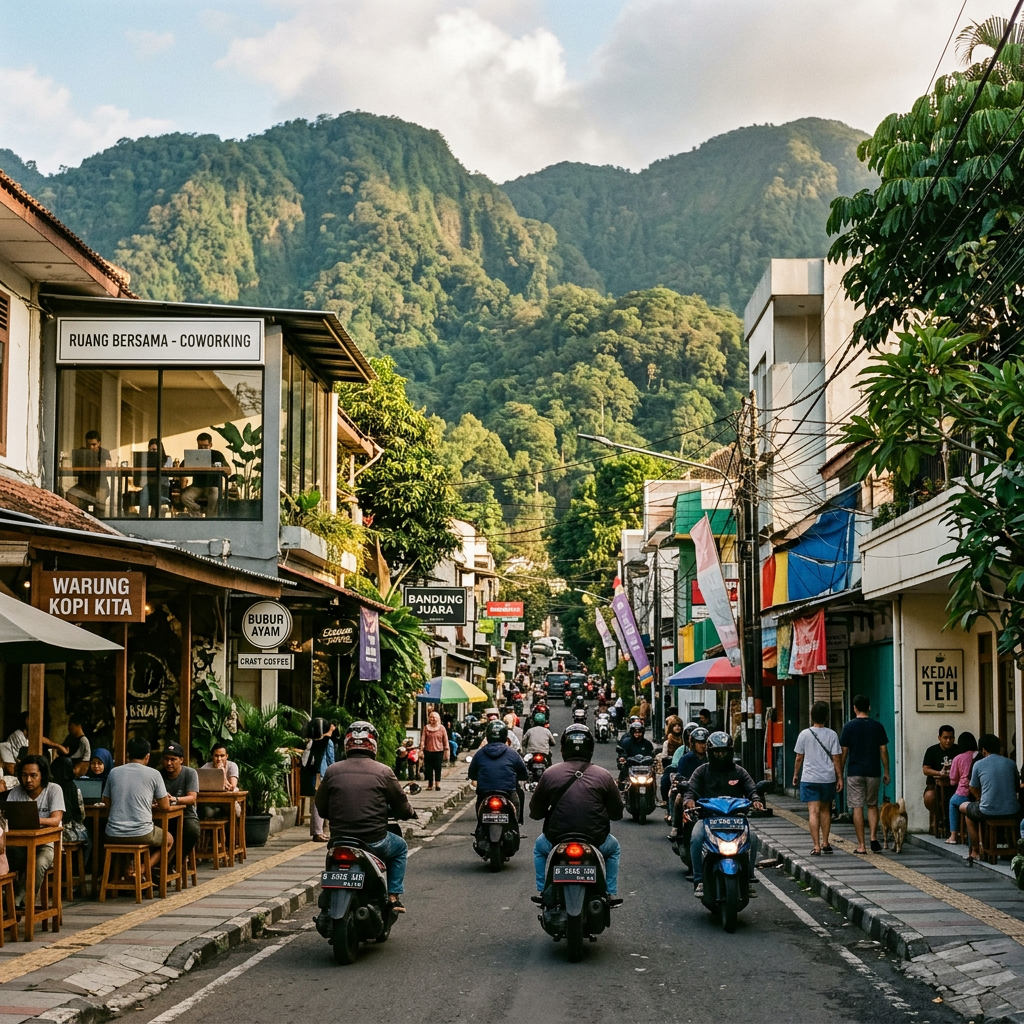
If you are weighing an Ipoh digital nomad stay, the short version is this: the city is cheaper and quieter than Kuala Lumpur or Penang, but its average wifi is slow. This Ipoh digital nomad guide covers rent, food, internet and visa rules, as of September 2026.
We checked each figure against a named source, including Numbeo, Nomads.com, Ookla data reported by Malay Mail, and official Malaysian and US government pages. Where a number is crowdsourced or dated, we say so.

How Ipoh Compares With Kuala Lumpur and Penang
Ipoh is the capital of Perak, roughly 2 to 2.5 hours north of Kuala Lumpur on the ETS train. It is known for colonial-era shophouses, limestone cave temples and a strong local food scene. However, it has no beach and little nightlife.
Most remote workers base themselves in or near Old Town, where heritage cafés double as informal workspaces. As a result, Ipoh tends to suit people planning a slow, budget-focused stay of several months rather than a social hub.
For a similar low-cost option with cooler weather, see our Cameron Highlands digital nomad guide. Cameron Highlands is also a common weekend trip from Ipoh.
Getting there is simple, because ETS trains run from KL Sentral to Ipoh several times a day. You can book seats on the official KTMB online ticketing site. Also, weekend trains can sell out, so book a few days ahead if you arrive on a Friday.
Cost of Living for an Ipoh Digital Nomad
Rent is where Ipoh saves you the most. For example, Numbeo’s Ipoh page, last updated in November 2025, lists about RM1,500 a month for a central one-bedroom flat and about RM1,000 outside the centre.
So at roughly RM4.08 per US dollar, that is about $245 to $370, before deposits and furnishing costs.
Food is cheap by regional standards. For example, Numbeo lists an inexpensive restaurant meal at around RM13.50 and a cappuccino at about RM11.50. Basic utilities average about RM254 a month, while home broadband runs around RM107.
| Item | Figure | Source and type |
|---|---|---|
| 1-bedroom flat, city centre | about RM1,500 / month | Numbeo, crowdsourced average |
| 1-bedroom flat, outside centre | about RM1,000 / month | Numbeo, crowdsourced average |
| Inexpensive restaurant meal | about RM13.50 | Numbeo, crowdsourced average |
| Basic utilities | about RM254 / month | Numbeo, crowdsourced average |
| Total monthly cost for a nomad | about $1,706 / month | Nomads.com, user-reported estimate |
The two sources point to different budgets. Nomads.com puts a nomad’s monthly cost at about $1,706, which likely reflects furnished rentals and café-heavy spending. By contrast, living in a local-style lease and eating at hawker stalls can cost far less, so track your first month before you commit.
Internet Speed and Coworking in Ipoh
Malaysia’s national 5G figures are strong but falling. For instance, Ookla data reported by Malay Mail put the measured median 5G download at 242.92 Mbps in Q3 2025, down from 451.79 Mbps in late 2023. The report links the drop to rising subscriber numbers and more fallback to 4G indoors and in rural areas.
Those are national medians, not what a specific Ipoh café will deliver. In fact, user reports on Nomads.com put Ipoh’s typical speed at around 13 Mbps, which the site rates as slow. Therefore, test the wifi at any apartment or workspace before you pay for a long stay.
For video calls, a fibre-connected coworking space is usually safer than café wifi. Also, most workspaces cluster around Old Town and the commercial area near Ipoh Parade, and a local SIM with a data plan makes a practical backup.
Visa Options: Tourist Entry vs the DE Rantau Nomad Pass
Many nationalities can enter Malaysia visa-free for short stays. For example, the US State Department says American citizens can stay up to 90 days for tourism or business. Most foreign visitors must also complete the Malaysia Digital Arrival Card (MDAC) before arrival.
Rules differ by passport, so check the Immigration Department of Malaysia’s country list for your own nationality. Also note that visitor entry is not a work authorisation.
For a longer remote-work stay, however, Malaysia offers the DE Rantau Nomad Pass, run by the Malaysia Digital Economy Corporation (MDEC). According to the Ministry of Digital’s announcement, non-tech professionals need annual income of about USD 60,000, or roughly USD 5,000 a month.
The ministry describes the pass as valid for up to two years. In practice, it is typically issued for 3 to 12 months and can be renewed within that limit, so check the latest terms on the MDEC DE Rantau page before you apply.
That income bar rules out many early-stage freelancers. Still, the pass is the formal route for remote work beyond a short visit, so plan the paperwork well before your 90 days run out. Visa rules can change and vary by nationality, so confirm your case with Malaysian immigration or MDEC.
Safety, Weather and Daily Logistics
Ipoh is generally regarded as a low-hassle city, and petty theft is the main concern. However, traffic is the bigger daily risk, since footpaths are uneven and motorbikes move through Old Town’s narrow lanes.
The weather stays hot and humid, typically from the high 20s to the mid-30s °C, with frequent afternoon rain. Also, regional haze can push air quality into unhealthy levels in some years, so check conditions before booking a long stay.
Private clinics are widely available in the city centre. Meanwhile, Grab covers rides and food delivery, and English is widely understood in cafés and shops.
Who Ipoh Suits Best
Ipoh works well for nomads who value low costs and few distractions over nightlife and a large coworking community. By contrast, it is a weaker fit if you need fast wifi every day without planning around it.
First, book one week in your target area. Then run a speed test at your desk on day one. Finally, sign a longer lease only after the connection and noise level work for your calls.

Frequently Asked Questions
Is Ipoh good for digital nomads on a budget?
Generally yes, since Numbeo’s rent and food figures sit below Kuala Lumpur and Penang. However, Nomads.com estimates about $1,706 a month for a typical nomad, so your budget depends heavily on housing and eating habits.
Do I need a visa to work remotely from Ipoh?
Many nationalities can visit visa-free for up to 90 days, but visitor entry is not a work authorisation. Therefore, remote workers planning a longer stay usually look at the DE Rantau Nomad Pass through MDEC.
How fast is the internet in Ipoh?
Malaysia’s measured national 5G median was 242.92 Mbps in Q3 2025, according to Ookla data via Malay Mail. Still, user reports for Ipoh put typical speeds around 13 Mbps, so fibre-equipped coworking spaces are usually the safer choice.
Related Reads
- Kuching Digital Nomad Guide 2026: New Sarawak Pass & Cost — an East Malaysian base with its own regional nomad pass.
- Langkawi for Digital Nomads: Is It Worth It in 2026? — a duty-free island alternative if you prefer the coast.
- Johor Bahru Digital Nomad Guide: The RTS Link Effect (2026) — how the upcoming Singapore rail link, due in 2027, is shaping another mid-tier base.
Sources
- Crowdsourced: Numbeo – Cost of Living in Ipoh
- Crowdsourced: Nomads.com – Ipoh
- Media (Ookla data): Malay Mail – Malaysia’s 5G speeds have nearly halved
- Official: KTMB – Online ticketing
- Official: US Department of State – Malaysia
- Official: Immigration Department of Malaysia – Visa Requirement by Country
- Official: Ministry of Digital Malaysia – DE Rantau Nomad Pass eligibility expanded
- Official: MDEC – DE Rantau Nomad Pass