Most “best digital nomad cities in Southeast Asia” lists skip Kuching entirely. That is exactly why it is worth a second look. Sarawak launched its own remote-work pass in November 2025, separate from Malaysia’s national program.
That changes the practical answer to “can I actually live and work here legally.” This Kuching digital nomad guide covers what the pass requires, what a month in Kuching costs, and where the internet holds up.
The information below reflects official SDEC sources and public nomad cost aggregators, checked as of late August 2026. Visa rules and fees change. Confirm current details with the Sarawak Digital Economy Corporation (SDEC) or the Sarawak Immigration Department before booking a Kuching digital nomad trip.

Why Kuching Instead of the Usual Hubs
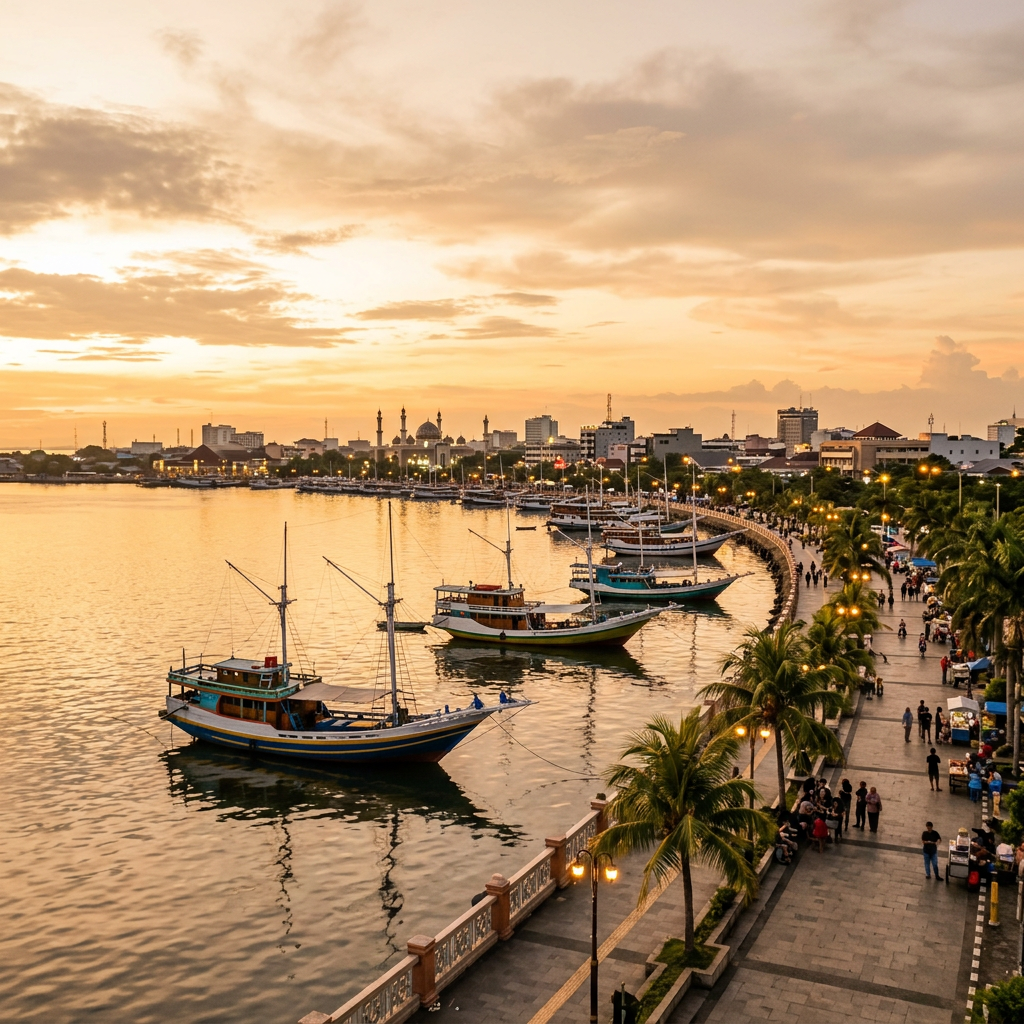
Kuching sits on the Sarawak River in Malaysian Borneo. It is a two-hour flight from Kuala Lumpur and well off the Chiang Mai-Bali-Bangkok circuit. The city has a walkable riverfront and a genuinely multicultural food scene.
Malay, Chinese, Iban, and Bidayuh influences are all in easy reach. Rent and daily costs also run lower than in Kuala Lumpur or Penang.
Kuching is generally quieter than the bigger hubs. That suits people who want to get work done rather than chase a nightlife scene.
What actually separates Kuching from peninsula cities like Langkawi or Melaka, though, is not the lifestyle. It is the legal pathway to stay long-term, because Sarawak runs its own immigration system.
Sarawak Has Its Own Immigration Rules
Under the Malaysia Agreement 1963 and Part VII of the Immigration Act 1959/63, Sarawak controls its own entry and exit rules, separate from Peninsular Malaysia’s. A pass approved for Kuala Lumpur or Penang does not necessarily cover Sarawak, so it is worth confirming your specific entry terms with Sarawak immigration directly rather than assuming a Peninsular pass carries over.
That is a large part of why Kuching needed its own digital nomad pathway rather than simply relying on the national one.
Malaysia’s original national DE Rantau Nomad Pass does not cover Sarawak; it generally applies to Peninsular Malaysia and Labuan. Sarawak instead operates a separate DE Rantau Sarawak Pass through SDEC. Anyone hoping to base themselves in Kuching under the national DE Rantau Nomad Pass alone has been working off the wrong document.
The New DE Rantau Sarawak Pass
The Sarawak Digital Economy Corporation (SDEC) opened applications for the DE Rantau Sarawak Pass on November 3, 2025. It was developed with Malaysia Digital Economy Corporation (MDEC) and is backed by the Sarawak state government. It allows eligible digital freelancers and remote workers to live and work in both Sarawak and Peninsular Malaysia.
This is the first phase of the broader Sarawak Digital Residency Programme (SDRP). For eligible remote workers who want a dedicated long-term workation route based in Sarawak, it is the most directly relevant option currently available.
According to SDEC’s official program page, the pass is structured as follows.
| Requirement | Detail |
|---|---|
| Pass type | Professional Visit Pass (PLIK) |
| Duration | 3 to 12 months, renewable for an additional 12 months |
| Eligible applicants | Digital freelancers, independent contractors, and remote employees of non-Malaysian employers, in tech or digital-domain-related fields (including IT, software development, UX/UI, cloud, cybersecurity, blockchain, AI, machine learning, data-related work, digital marketing, and digital content development) |
| Minimum annual income | USD 24,000 |
| Fee | RM 2,000 for the main applicant and RM 1,000 per dependent, per SDEC’s current official program page. Note: SDEC’s FAQ PDF has listed RM 2,160 / RM 1,080 (inclusive of 8% SST) in the past, so confirm the current fee directly with SDEC at application time. |
| Dependents | Spouse, children, and parents of the main applicant may be included |
Freelancers need an active contract lasting more than three months. Multiple contracts are fine, and clients can be local or foreign. Remote employees need an employment contract of more than three months with a foreign, non-Malaysian employer.
Applications go through MDEC’s Malaysia Digital portal. SDEC also publishes a document checklist and FAQ on its own site, worth reading in full before applying since requirements and fees can shift as the program matures.
If your work does not fall under tech, software, digital marketing, digital content, or other digital-domain-related work, the pass likely will not apply to you. A standard tourist entry, with its own Sarawak-specific stay period, remains your only option while the program stays this narrow.
Cost of Living in Kuching
Kuching is one of the more affordable state capitals in Malaysia. Cost-of-living trackers such as Nomads.com commonly put one-bedroom rents outside the city center around RM 800 to RM 1,400 a month.
That figure comes from an aggregator, not a government survey, so treat it as a planning range. Either way, it runs meaningfully cheaper than equivalent units in Kuala Lumpur or Penang.
A single-person budget can often stay below RM 4,000 a month covering rent, food, transport, and a coworking membership. A couple who eats out a couple of times a week and keeps a small car often lands somewhere around RM 6,000 to RM 8,000 combined, again per aggregator data rather than an official statistic. Use these as a starting budget, then adjust after a scouting trip.
Internet and Coworking
Home fiber broadband in Kuching is generally reliable, per nomad city guides covering the area. Entry-level fiber plans start around RM 89 a month, and a 500 Mbps plan runs about RM 150 a month, based on that same reporting; confirm current pricing directly with a provider such as TM or Unifi before committing to a lease, since ISP rates change.
Nationally, Malaysia’s fixed broadband has ranked in the middle tier of Ookla’s Speedtest Global Index in recent years; TM led the market with a median 112 Mbps download speed in Ookla’s Q4 2023 report, the most recent breakdown with confirmed provider-level figures. Treat any single provider’s advertised speed as a ceiling, not a guaranteed everyday number.
Coworking spaces exist in Kuching, but the scene is smaller than in Kuala Lumpur, Chiang Mai, or Bali. Mobile performance can also vary by carrier and location, so a fixed fiber connection, rather than a phone hotspot, is the safer baseline for anyone whose income depends on video calls.
Practical Tips for a First Kuching Digital Nomad Trip
- Confirm your Sarawak entry stamp separately from any Peninsular Malaysia visa or pass; the two are not interchangeable.
- If you fly in from Kuala Lumpur rather than internationally, ask about your specific permitted stay length at the Sarawak immigration counter, since it can differ from a direct international arrival.
- Book a short-term stay first and view apartments in person before signing a longer lease, since availability and pricing vary a lot by neighborhood.
- Test your prospective coworking space or café’s wifi speed at the time of day you would actually be working, not on a quiet weekend morning.
Common Mistakes to Avoid
The biggest mistake is assuming the national DE Rantau Nomad Pass covers Sarawak. It does not. Immigration officers in Kuching apply Sarawak’s own rules, so someone who arrives expecting Peninsular Malaysia’s terms can end up with a shorter stay than planned.
The second mistake is assuming the DE Rantau Sarawak Pass covers any remote job. It is currently scoped to tech and digital-domain-related work. A remote customer support rep or an online teacher, for example, would not qualify under the criteria SDEC has published so far.

Frequently Asked Questions
Does Malaysia’s DE Rantau visa work in Kuching?
No. The national DE Rantau Nomad Pass generally covers Peninsular Malaysia and Labuan, not Sabah or Sarawak. Kuching requires the separate DE Rantau Sarawak Pass administered by the Sarawak Digital Economy Corporation.
How much does the DE Rantau Sarawak Pass cost?
SDEC’s current official program page lists RM 2,000 for the main applicant and RM 1,000 per dependent. SDEC’s FAQ PDF has separately listed RM 2,160 / RM 1,080 inclusive of SST, so confirm the current fee with SDEC directly at application time. The Professional Visit Pass is valid for 3 to 12 months and renewable for another 12 months.
Is Kuching’s internet good enough for remote work?
Home fiber connections are generally reliable and affordable, with 500 Mbps plans around RM 150 a month. Mobile data coverage is less consistent, so most remote workers rely on fixed fiber rather than a phone hotspot for video calls.
Related Reads
- Langkawi for Digital Nomads: Is It Worth It in 2026? — another Malaysian base, but on the peninsula under the national DE Rantau pass.
- Melaka Digital Nomad Living Costs: What to Expect in 2026 — a cost comparison point for a smaller, more affordable Malaysian city.
Sources
- Sarawak Digital Economy Corporation (SDEC), DE Rantau Sarawak Pass — Criteria and Features (official program page)
- Sarawak Digital Economy Corporation (SDEC), SDEC Opens Applications for DE Rantau Sarawak Pass, November 3, 2025 (official press release)
- Sarawak Digital Economy Corporation (SDEC), DE Rantau Sarawak Nomad Pass — Frequently Asked Questions (official FAQ, fee schedule)
- Nomads.com, Cost of Living in Kuching
- Nomads.com, Kuching for Digital Nomads
- Malay Mail, Ookla: TM Was the Fastest Fixed Broadband Provider in Malaysia for Q4 2023
Visa rules and fees change. Confirm current requirements directly with SDEC or the Sarawak Immigration Department before applying or booking a long-term stay.