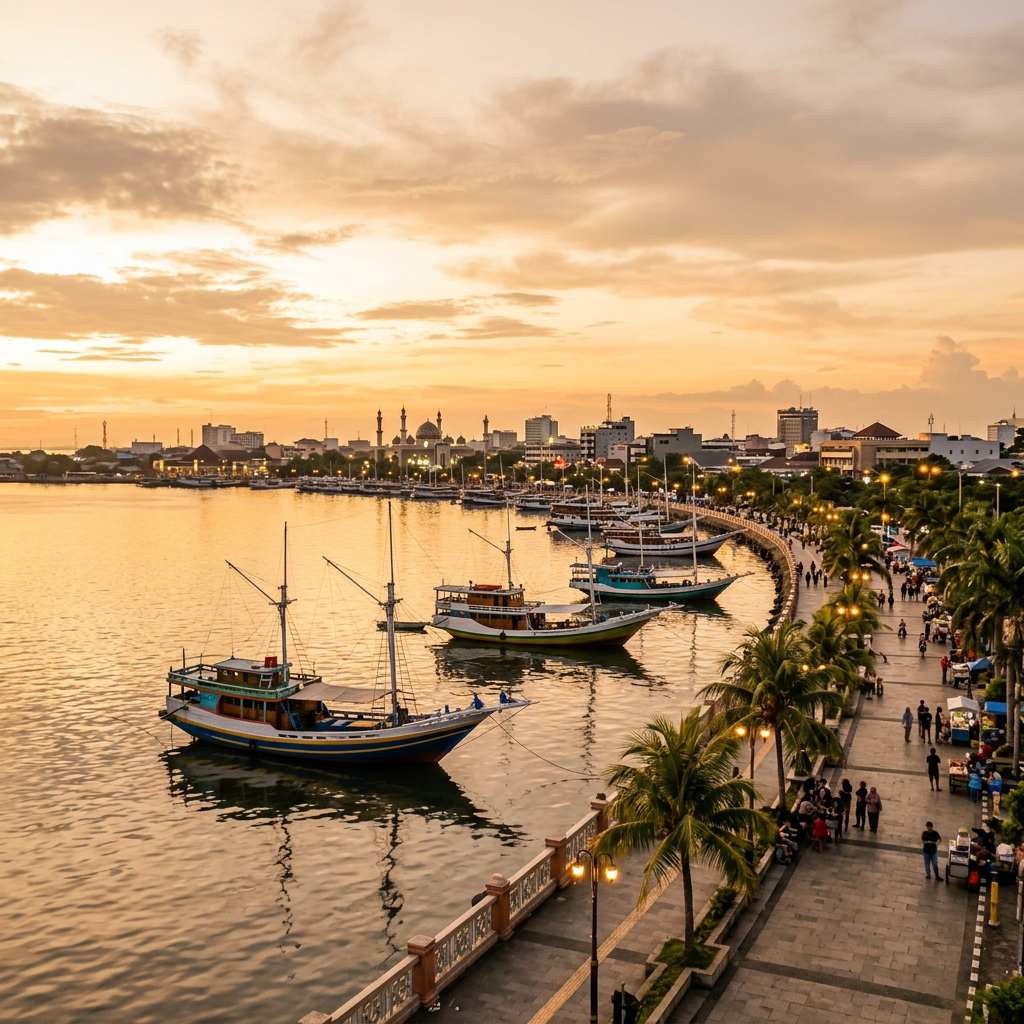
Bacolod rarely comes up when people compare Southeast Asian bases for remote work, next to the usual Cebu or Manila picks. If you’re weighing a slower-paced Philippine city against those two, here’s what a month in Bacolod actually costs, how the internet holds up, and what the visa rules mean for a longer stay.
This guide draws on official Philippine government sources for visa rules. Everyday prices come from current cost-of-living data, cross-checked against multiple listings rather than one blog’s estimate. As we checked them in August 2026, not re-verified since (apart from the ACR I-Card rule noted below), Bacolod’s nomad scene is still small, and published nomad-specific data for the city is thinner than for a hub like Bangkok or Chiang Mai.
Treat the numbers below as a starting range, and confirm current listings before you book.

Why Bacolod, Not Iloilo or Cebu
Bacolod sits on Negros Occidental, a short ferry ride from Iloilo City. Locals call it the City of Smiles. Its economy runs on sugar, food processing, and a growing BPO sector.
That last point can matter for nomads: cities with an established outsourcing industry often see more investment in office-grade infrastructure than purely tourist towns, though that’s a general pattern, not a guarantee about any specific building or neighborhood’s power reliability.
Compared to Iloilo City, the nomad scene in Bacolod is quieter and less nomad-aware. That cuts both ways. Rent runs lower, and you won’t compete with other remote workers for the same handful of coworking desks.
However, the expat and nomad community is thinner here. Networking happens more through BPO and local business circles than through nomad meetups.
Bacolod Digital Nomad Cost of Living (2026)
Cost-of-living trackers place a frugal monthly budget in Bacolod, including a modest studio rent, at roughly $500. A comfortable budget — a nicer one-bedroom closer to the city center plus regular dining out — runs closer to $800-$900 total. Those figures come from self-reported user data on cost-of-living aggregators rather than a government statistics office, and Wise’s own Bacolod page currently notes it has limited data for this specific location, so treat both numbers as rough anchors rather than precise budgets.
| Expense | Typical Monthly Cost (USD) |
|---|---|
| 1-bedroom apartment, city center | ~$273 |
| 1-bedroom apartment, outside center | ~$185 |
| 3-bedroom apartment, city center | ~$478 |
| Utilities (85m² apartment) | ~$94 |
| Inexpensive restaurant meal | ~$2 |
| Mid-range dinner for two | ~$11 |
Rent is the biggest lever on your total budget, same as everywhere else in the Philippines. Landlords in Bacolod are generally open to negotiating monthly rates.
This is especially true for stays of three months or longer, well beyond what Airbnb’s listed prices suggest.
Internet and Coworking
There’s no Bacolod-specific entry in Ookla’s Speedtest Global Index. City-level speed claims from travel blogs should therefore be read skeptically. What we do have is national data: Converge ICT topped Ookla’s Philippine fixed-broadband rankings for the first half of 2026.
It posted a Speed Score of 61.86 and a Connectivity Score of 73.14 nationally. That’s a national leaderboard figure, not a Bacolod average, and your actual speed depends heavily on which building and provider you land with.
Fiber connections in newer Bacolod condos and BPO-adjacent neighborhoods generally handle video calls without issue. Older residential areas can be hit or miss. If a fast, stable connection is non-negotiable for your work, test the specific building’s wifi before signing a lease.
Don’t trust a listing description alone.
Coworking options are limited compared to Cebu or Manila. Most nomads work from condo units, cafes near SM City Bacolod, or hotel business centers rather than a dedicated coworking space. If a real coworking desk matters to your routine, factor that gap into your decision before you commit to a long stay.
Visa and Entry Rules
Citizens of most non-visa-required countries — a list that includes the US, UK, and most of the EU, among others — enter the Philippines visa-free under the Bureau of Immigration’s visa waiver program. This grants an initial 30-day stay. From there, you have two main paths for staying longer, and mixing them up is a common mistake among first-time visitors.
The standard route is a short extension at a Bureau of Immigration office. The first 29-day extension commonly runs somewhere in the ₱3,000-3,500 range, with later extensions costing more depending on the office and whether an ACR I-Card is bundled in. Fees are revised periodically, so confirm the current schedule with the Bureau of Immigration before you go. The Bureau of Immigration FAQ says foreign nationals on a Temporary Visitor’s Visa who stay more than 59 days need an Alien Certificate of Registration (ACR I-Card); we read that page on October 13, 2026, so confirm the current rule with the Bureau before you rely on it.
Non-visa-required nationals can generally keep extending up to a combined maximum stay of around 36 months, though the exact ceiling and process can vary by nationality and by immigration office — some visa-required nationals face a lower cap, closer to 24 months. Confirm directly with the Bureau of Immigration before you commit to a long stay.
The other option is the Long-Stay Visitor Visa Extension (LSVVE). It grants up to six months in a single transaction rather than the usual 29-day increments, which suits nomads who know upfront they want a full season in Bacolod. It’s only offered at select Bureau of Immigration offices and is subject to approval, though, so check availability at your local office before counting on it.
Fees and eligibility differ by nationality. Confirm current requirements on the Bureau of Immigration’s own site rather than a third-party guide, since fees have changed more than once in recent years.
Getting Around and Where to Stay
Bacolod’s city center is reasonably walkable, though the city spreads out toward the outer districts. Most residents rely on jeepneys, tricycles, or ride-hailing apps for daily errands. If you want a short commute to cafes and coworking-adjacent spots, the areas around SM City Bacolod have the densest cluster of newer condo developments and are a common starting point for nomads; the Bacolod-Silay boundary is another option worth a look if you’d rather be closer to the airport.
Anyone planning a first visit should book a short-term stay of two to four weeks before committing to a longer lease. That gives you time to test the internet in a specific building, scope out a few work-friendly cafes, and confirm the commute works for your routine. Skip the temptation to lock into a year-long contract sight unseen.
This guide reflects current listings and official visa rules checked directly at the source, not secondhand blog summaries. Cross-check specific numbers before making a final decision, especially the visa fees above.

FAQ
Is Bacolod cheaper than Cebu or Manila for digital nomads?
Generally, yes, for most budgets. Rent and everyday food costs in Bacolod tend to run below Cebu City and well below Manila, based on current cost-of-living listings. Cebu and Manila do have larger nomad and coworking communities, though, so you’re trading lower costs for a smaller professional network.
Do I need a visa to work remotely from Bacolod?
The Philippines doesn’t have a dedicated digital nomad visa in force as of this writing. Most remote workers stay on the standard tourist visa waiver and extensions described above, which authorize tourism, not local employment. You’re clearly not authorized to work for a Philippine employer on this status. Working remotely for a foreign employer or foreign clients while on a tourist stay sits in more of a gray area that Philippine immigration law doesn’t explicitly spell out either way, even though it’s widely practiced among long-term visitors. If your work situation matters to your plans, it’s worth a direct conversation with an immigration lawyer rather than relying on common practice.
How reliable is the internet in Bacolod for video calls?
This varies by building rather than by city as a whole. Newer condo developments with fiber connections are generally reliable for video calls. Older buildings can have inconsistent speeds.
Testing the connection in your specific unit before signing a lease is the safest approach.
Related Reads
- Iloilo City Digital Nomads: 5 Things to Know (2026) — the nearest larger city, a short ferry ride from Bacolod, with a bigger nomad community.
- Dumaguete Cost of Living for Digital Nomads in 2026 — another Negros Island base with a similar small-city pace and cost profile.
- Philippines Digital Nomad Visa Status 2026 — where the dedicated nomad visa stands if tourist extensions are not enough.
Sources
- Bureau of Immigration Philippines — Temporary Visitor (9(a)) Visa Waiver
- Bureau of Immigration Philippines — FAQs (ACR I-Card, extensions)
- Philstar.com — Converge Tops Ookla’s Fixed Broadband Metrics (July 2026)
- Wise — Cost of Living in Bacolod 2026
- Respicio & Co. — Philippine Tourist Visa Extension Fees and Requirements