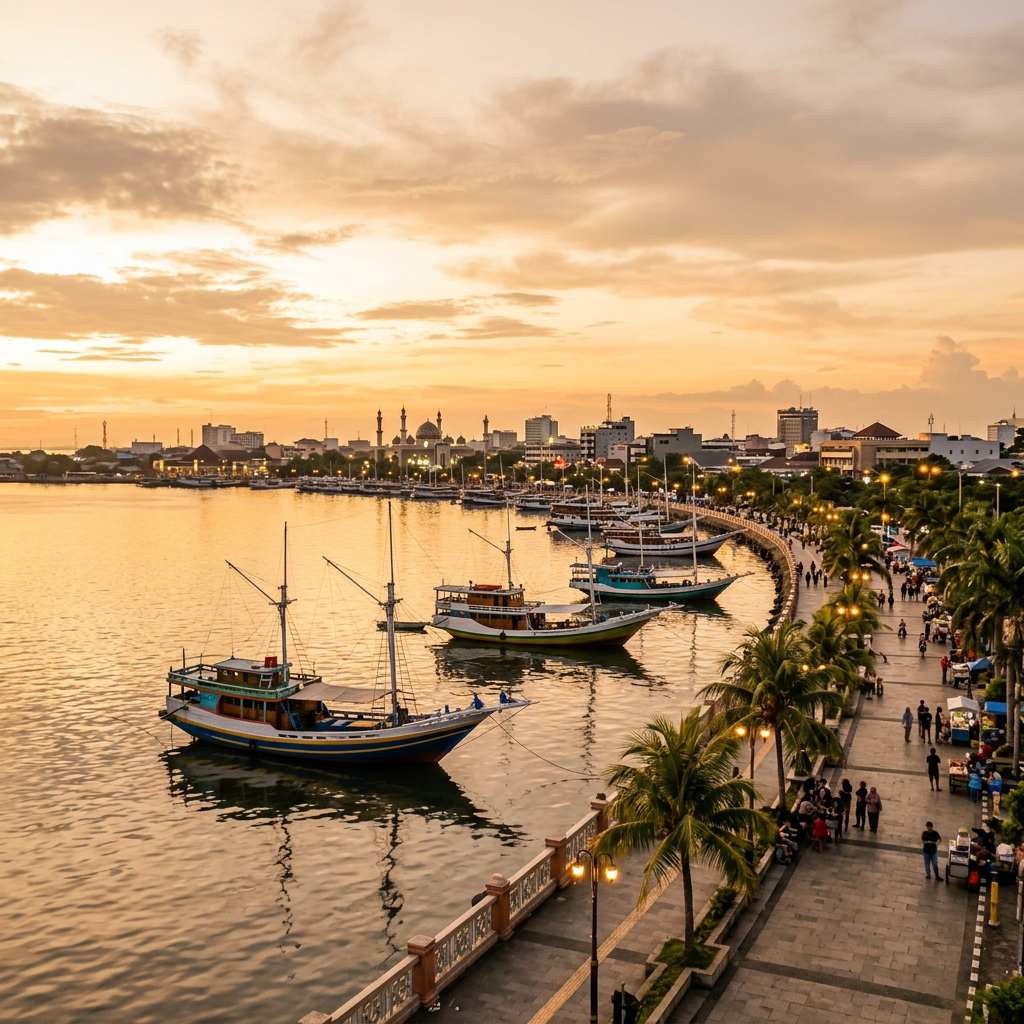
Most nomad guides to Thailand stop at Bangkok, Chiang Mai, and the islands. Hat Yai rarely makes the list. It’s Southern Thailand’s largest city and the commercial hub of Songkhla province. It also has fiber internet, a working airport, and rent well below Chiang Mai’s. This guide is for anyone weighing Hat Yai digital nomad life for real. It covers actual costs, visa options, and where the city falls short. The figures below come from cost-of-living trackers, Thailand’s broadband rankings, and Thai immigration guidance. Rent and visa rules can shift, so recheck before you book anything long-term.

Why Hat Yai Shows Up on Nomad Radar at All
Hat Yai functions as the trade and transport hub linking Thailand to northern Malaysia. That role built out infrastructure a city this size wouldn’t otherwise have. There’s an international airport with direct flights to Kuala Lumpur, Singapore, and Bangkok. A rail shuttle from Hat Yai Junction reaches the border at Padang Besar, where travelers change trains onto Malaysia’s KTM ETS network toward Kuala Lumpur. Downtown centers on Prince of Songkla University and the Central Hat Yai shopping complex. None of that makes Hat Yai scenic the way Chiang Mai or Luang Prabang are. However, it does make daily logistics easier than in smaller Southeast Asian towns. That matters more than scenery once you’re renewing a visa or hunting for a decent monitor.
What Rent and Daily Costs Actually Look Like
Cost-of-living trackers Wise and CityCost both rank Hat Yai among Thailand’s more affordable mid-size cities. Wise’s Hat Yai data puts a one-bedroom condo in the city center at around $385 per month, dropping to about $157 outside downtown. CityCost puts total single-person monthly costs, rent included, at around $752. Utilities for a typical apartment add roughly $120-$130 per month. These are point estimates from aggregator data, not government statistics, and different trackers show real spread between each other. Treat them as a planning range, not a fixed budget, and expect your actual number to land somewhere around these figures rather than exactly on them.
| City | 1BR City-Center Rent (approx.) | Single-Person Monthly Cost (approx.) |
|---|---|---|
| Hat Yai | $290-$400 | $650-$750 |
| Chiang Mai | $420-$460 | $800-$870 |
| Bangkok | $650-$700 | $1,000-$1,100 |
The Chiang Mai and Bangkok figures come from the same two trackers used for Hat Yai — Wise for rent, CityCost for total monthly cost — so this is an apples-to-apples comparison, not a single cheap listing mixed against a broad city average. Hat Yai’s cost advantage holds up across both measures: cheaper rent and a lower total monthly cost than either Chiang Mai or Bangkok.
Internet: Genuinely Fast, With the Usual Caveats
Thailand ranked 13th globally for fixed broadband speed in the most recently published Speedtest Global Index, according to Nation Thailand’s report on the ranking. That index measured a national average download speed of 237.05 Mbps; the report itself dates to early 2025, so treat it as the latest available snapshot rather than a fresh 2026 figure. That’s a measured, real-world average, not an advertised plan speed. Home fiber plans in Hat Yai are typically advertised at 200-500 Mbps. Café and coworking wifi tends to run slower in practice, closer to 50-100 Mbps. For most remote work, video calls included, either tier is comfortable. However, test a rental’s actual connection during your first days. Advertised fiber packages and real household throughput can diverge once several devices share one router, especially during peak evening hours.
Visa Options: DTV, Exemption, and the Malaysia Border
Most nomads basing in Hat Yai use one of two routes. The first is Thailand’s Destination Thailand Visa (DTV). Our DTV visa update covers current requirements in detail; it needs proof of remote income and grants long stays without repeated exits. The second is the standard visa exemption. Thailand cut this from 60 to 30 days for nationals of 60 countries and territories, effective September 15, 2026, after the rules were published in the Royal Gazette on August 31, 2026, according to the Tourism Authority of Thailand. Some other nationalities now get a 15-day exemption or Visa on Arrival instead, and the old 60-day exemption has ended. Our Thailand visa exemption guide covers the country lists; check it or Thai immigration directly before you book. Last checked October 12, 2026.
Hat Yai’s proximity to Malaysia adds a third option some nomads still use. A land border run to Sadao sits roughly 55-60 km away, while Padang Besar is somewhat closer, roughly 45-50 km; both are about an hour by car or train. Padang Besar connects directly to Malaysia’s rail network, making it the more comfortable crossing for a same-day trip. That said, Thai immigration officers have discretion to deny re-entry if they suspect someone is using repeated exemption stamps to live in Thailand long-term. Back-to-back runs draw more scrutiny than they did a few years ago. Treat a border run as an occasional top-up, not a residency strategy. Get the DTV instead if you plan to stay more than a few months.
Who Hat Yai Digital Nomad Life Actually Fits
Hat Yai suits a specific kind of nomad more than a general one. Budget-focused remote workers who want reliable infrastructure tend to do well here. So do people who need frequent, cheap access to Malaysia, whether for banking, flights, or a change of scenery. It fits less well for anyone chasing a walkable old-town feel or a large, ready-made nomad community. Nightlife stays fairly local and low-key. Expect to build a routine independently rather than plugging into an existing scene.
Getting Started: A Practical Checklist
- Book a short-term stay first (2-4 weeks) before signing a longer lease, since prices and availability shift by neighborhood.
- Test your specific unit’s internet speed in person rather than trusting a landlord’s advertised figure.
- Pick your visa route before arrival: DTV for longer stays, or visa exemption plus one border top-up for shorter trips.
- If you plan a Malaysia border run, bring proof of onward travel and enough funds, since officers can ask for both.
This guide draws on official Thai immigration sources for the visa sections. Cost figures come from independent cost-of-living trackers, cross-checked against each other rather than taken from a single site. It reflects information available as of this writing. Visa rules have changed more than once in 2026, so confirm current requirements with Thai immigration or a licensed visa agent before finalizing plans, especially if you’re counting on the border-run option.

Frequently Asked Questions
Is Hat Yai safe for solo remote workers?
Hat Yai functions day-to-day as an ordinary Thai commercial city, and Songkhla province sits outside the three provinces at the center of Thailand’s long-running southern insurgency: Yala, Pattani, and Narathiwat. That said, this is an active conflict, not a historical footnote. Attackers killed five soldiers in a checkpoint bombing and shooting in Narathiwat on July 22, 2026, and Hat Yai itself has been hit by bombings in past years. Treat any “generally safe” framing as a baseline, not a guarantee, check your home country’s current travel advisory for southern Thailand specifically, and stay alert to local news before and during a stay.
Can I use the Destination Thailand Visa to live in Hat Yai long-term?
Yes. The DTV isn’t tied to a specific city. DTV holders can base in Hat Yai the same way they’d base in Bangkok or Chiang Mai. See our DTV visa update for current income and application requirements.
How does Hat Yai compare to Penang for nomads doing Malaysia border runs?
Hat Yai is the Thai-side base, about an hour from the Malaysian border. Penang sits deeper inside Malaysia and works as its own nomad hub, not a border town. Nomads sometimes split time between the two: Hat Yai for cheap Thai-side stays, Penang for a change of scenery. They serve different purposes rather than competing directly.
Related Reads
- Ipoh Digital Nomad Costs, Wifi and Visa Rules for 2026 — another under-covered, budget-friendly second-tier city, this one in Malaysia
- Kuching Digital Nomad Guide 2026 — a similar low-competition base with its own cost and visa breakdown
- Reliable Wifi for Digital Nomads in Southeast Asia — background on how regional internet speeds are actually measured
Sources
- Wise: Cost of Living in Hat Yai (2026) — rent and utilities figures
- CityCost: Cost of Living in Hat Yai — single-person monthly cost estimate
- Wise: Cost of Living in Chiang Mai (2026) and CityCost: Cost of Living in Chiang Mai — comparison-table figures
- Wise: Cost of Living in Bangkok (2026) and CityCost: Cost of Living in Bangkok — comparison-table figures
- Nation Thailand: Thailand ranks 13th in the world for fixed broadband speed — reporting the Speedtest Global Index figures
- TAT Newsroom: Thailand introduces new 30-day and 15-day visa exemption rules from 15 September (September 1, 2026) — official confirmation of the Royal Gazette publication and September 15 effective date
- TAT Newsroom: Thai Cabinet approves updated visa measures (July 14, 2026) — earlier Cabinet revision, superseded by the September 1 notice above
- Al Jazeera: Five soldiers killed in southern Thailand checkpoint attack (July 23, 2026) — current context for the safety FAQ
- Thailand Immigration Bureau visa guidance, referenced via our existing DTV and visa exemption coverage