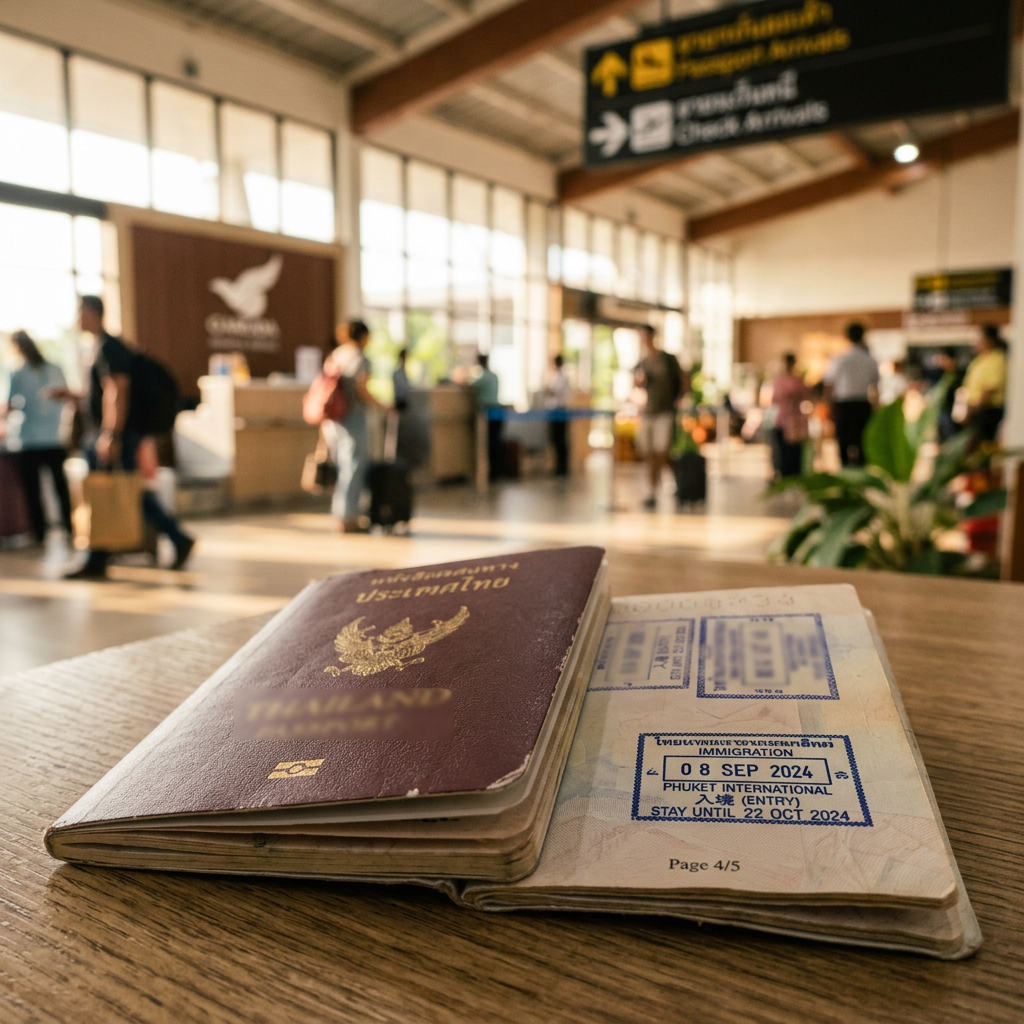
Malaysia is swapping out the immigration system it has run for nearly two decades. If you’ve flown through KLIA, crossed at the Johor causeway, or landed in Penang or Kuching this year, you may have already seen the new QR lanes. The government is scheduled to begin nationwide deployment by September 2026, but the rollout stays phased for years after that.
As a result, a few habits digital nomads relied on for years are changing. That includes filling in a paper arrival card and counting on a slow manual queue to double-check a stamp.
This guide is based on the Immigration Department of Malaysia’s own MyNIISe registration page and app listings, plus an official rollout schedule reported by Malaysia’s national broadcaster RTM. Where a number comes from independent trade-press reporting rather than an official document, that’s flagged below.

What MyNIISe actually is
MyNIISe stands for National Integrated Immigration System. It’s the Immigration Department of Malaysia’s replacement for MyIMMs, the older platform that had run since the early 2000s. MyIMMs is an aging immigration platform that Malaysia is replacing as part of a broader modernization of border processing. The department is known locally as Jabatan Imigresen Malaysia, or JIM.
It publishes the new app directly on its own site, with official listings on the Google Play Store, Apple App Store, and Huawei AppGallery.
The app bundles passport verification, visa and pass checks, and facial recognition into one clearance flow. Per the Immigration Department’s own announcement, the Malaysia Digital Arrival Card (MDAC) can now be filled directly through the MyNIISe app, so eligible travelers can handle both steps from the same app instead of two separate ones.
According to a March 2026 report from Malaysia’s national broadcaster RTM, citing the Home Ministry, Malaysia has 110 immigration entry points nationwide. Full NIISe implementation is scheduled to roll out in phases from September 1, 2026 through October 18, 2029: 67 entry points first, with the remaining 35 following afterward.
So September 2026 marks the start of that phased nationwide push, not a single-day switch-on everywhere. Separately, other outlets, including the New Straits Times and Biometric Update, have reported a longer-term hardware target of 635 automated gates across 125 entry points by 2028. That figure appears to describe the eventual full physical build-out rather than the same 110-entry-point immigration count above; the two reports may be using different definitions of “entry point,” and this article can’t fully reconcile the discrepancy from public reporting alone.
What’s better confirmed is the initial airport phase. The Star, an independent Malaysian outlet, reported on January 29, 2026, that MyNIISe’s QR-code e-gates began integration on March 1 at 46 pedestrian e-gates across five airports: KLIA Terminal 1, KLIA Terminal 2, Penang, Kota Kinabalu, and Kuching.
Borneo Post ran the same figures independently. That part of the rollout is well-documented and already live, separate from the broader phased nationwide target.
Who can actually use the e-gates
Malaysia currently lists travelers from 63 countries among those eligible for its autogate/eGate system, a figure confirmed across current 2026 travel-advisory reporting and consistent with the Immigration Department’s own eligibility framework. That list includes the GCC states, the UK, US, Canada, Australia, New Zealand, Japan, South Korea, China, and all EU member states, among others.
Whether that exact list carries over unchanged to every MyNIISe-branded lane specifically hasn’t been independently confirmed by this article, so if your nationality matters to your travel plans, check the MyNIISe app or your nearest Malaysian mission for the current list rather than relying on this figure alone.
Separately: a valid machine-readable biometric passport is required for the MyNIISe QR-code and biometric e-gate process specifically. Travelers who can’t use that process, whether due to passport type or nationality, still have other immigration-clearance options available at their checkpoint, such as a manual counter.
Digital nomads moving frequently through KLIA, or across the Johor–Singapore land crossing, stand to save the most time. That’s because those checkpoints see the heaviest foreign-traveler volume, so the time saved per crossing adds up fastest there, once you’re enrolled.
How to register before you fly
The published process, confirmed on the Immigration Department’s own NIISe page, works like this for first-time foreign users:
- Download the MyNIISe app from the Google Play Store, Apple App Store, or Huawei AppGallery.
- Scan your passport’s photo page, then read the embedded biometric chip using your phone’s NFC.
- Complete a selfie-based identity check to match your face against the passport photo.
- Generate a MyNIISe QR code, which covers your whole travel group under one code, according to the Immigration Department’s own materials on the app.
- Scan that QR code at an e-gate on arrival or departure, at a participating checkpoint.
You’ll still need a valid machine-readable e-passport with a functioning biometric chip. Depending on your nationality, you may also need to file arrival information before or upon landing. That’s the MDAC step now built into the app.
MyNIISe access is presented as part of the standard immigration clearance process rather than as a separate visa or entry product with its own fee. It rides on top of whatever visa or entry charges already apply to your nationality.
Manual immigration counters, and existing e-gate lanes, stay open throughout the rollout — Malaysia’s immigration Director-General confirmed via Bernama in January 2026 that MyNIISe is not mandatory and travelers have multiple clearance options. So a rejected scan isn’t a reason to panic at the airport.
Why Malaysia is replacing the old system now
MyIMMs, the platform MyNIISe replaces, had been running for close to twenty years. Reporting on the switch describes it as increasingly obsolete for the volume Malaysia’s airports now handle.
The timing also comes as Malaysia is pushing to handle higher international visitor volumes under Visit Malaysia 2026.
Malaysia’s national broadcaster RTM, citing Immigration Department officials, puts the new system’s processing time at four to five seconds per passenger — a meaningful gain over a standard manual counter, which takes noticeably longer per traveler. That speed difference is the operational case JIM has made for the rollout.
What this means if you’re already living in Malaysia
If you’re on a DE Rantau pass, an Employment Pass, MM2H, or another long-stay pass, MyNIISe changes how you clear the physical gate; it doesn’t change your visa conditions, which remain governed by your specific pass. Registering the app before a visa run, or a border hop out to Singapore or Thailand, means you’re not setting up an account for the first time at a crowded checkpoint.
MyNIISe now handles MDAC filing too. So travelers who used to fill out a separate arrival card in the days before landing can do both in one pass through the app. That’s assuming their nationality sits inside the current eligibility window, of course.
Take a routine trip out of Kuala Lumpur and back, say to Singapore, assuming you remain eligible for entry under your current immigration status. The practical difference MyNIISe makes is a shorter line on the way back in. It isn’t a change to how long you’re allowed to stay, or what documents you need to carry.
The passport itself, and whatever pass or visa is attached to it, still controls your legal status in the country.
One practical wrinkle is worth flagging here. The September 2026 date marks the start of nationwide deployment, not its completion — per RTM’s own reporting, full coverage of all 110 entry points is scheduled to continue through October 2029. It isn’t a guarantee that every land border or smaller airport will have e-gates live on day one.
As of this writing, the phased rollout has covered the major international airports and the Johor land crossings. Smaller checkpoints are expected to follow through 2029 on the schedule RTM reported. If you’re routing through a smaller entry point, check the Immigration Department’s own site close to your travel date instead of assuming full coverage.
Malaysia’s immigration Director-General has confirmed manual processing and conventional autogates remain available throughout the rollout, matching how the department handled the MDAC rollout and other digital changes before this one: phase by phase, with a manual fallback kept running until the new system proves itself at scale.

FAQ
Do I have to register for MyNIISe before flying to Malaysia?
At present, MyNIISe registration is not mandatory, per Malaysia’s immigration Director-General; it only unlocks the faster QR-code e-gate lane. Travelers who skip it, or whose nationality isn’t yet in the eligibility window, still clear immigration through the standard manual counters or existing e-gates. This could change as the rollout matures, so check current requirements before you travel.
Does MyNIISe replace my visa or entry pass?
No. It’s a clearance and identity-verification tool, not a visa product. Whatever visa exemption, visa-on-arrival, or long-stay pass you hold still governs how long you can stay and what you can do in Malaysia.
MyNIISe just changes how you get through the gate.
What if my passport doesn’t have a biometric chip?
You’ll need to use another immigration-clearance option available at your checkpoint, such as a manual counter. A valid machine-readable e-passport with a working chip is required specifically for the MyNIISe QR-code and biometric e-gate lane.
Related Reads
- DE Rantau Sarawak Pass: Malaysia’s Newest Digital Nomad Visa — MyNIISe changes your airport routine, not the terms of this pass.
- Malaysia MM2H Visa 2026: Tiers, Costs & Property Rules — MyNIISe changes the immigration-clearance process; your MM2H eligibility and conditions remain separate.
- Thailand’s THIM App 2026: What It Means for Digital Nomads — Thailand is rolling out its own digital immigration tool on a similar timeline.
Sources
- Immigration Department of Malaysia — “Now it’s easier with NIISe” (official app page)
- Immigration Department of Malaysia — MDAC integration announcement, Jan 21, 2026
- Portal Berita RTM — NIISe percepat pemeriksaan, elak kesesakan (110 entry points, Sept 2026–Oct 2029 phased schedule)
- Biometric Update — Malaysia automating border checkpoints to combat illegal crossings
- Business Standard — Malaysia to launch fast-track biometric immigration from Sept 2026
- The Star — MyNIISe integration with e-gates begins March 1 at major airports
- Borneo Post — Kota Kinabalu, Kuching among five airports to get MyNIISe QR e-gates March 1
- Bernama — MyNIISe Not Yet Mandatory, Travellers Have Multiple Clearance Options – Immigration DG
Information last checked September 2026. Immigration procedures and rollout timelines change. Confirm current requirements on the Immigration Department of Malaysia’s official site before you travel.