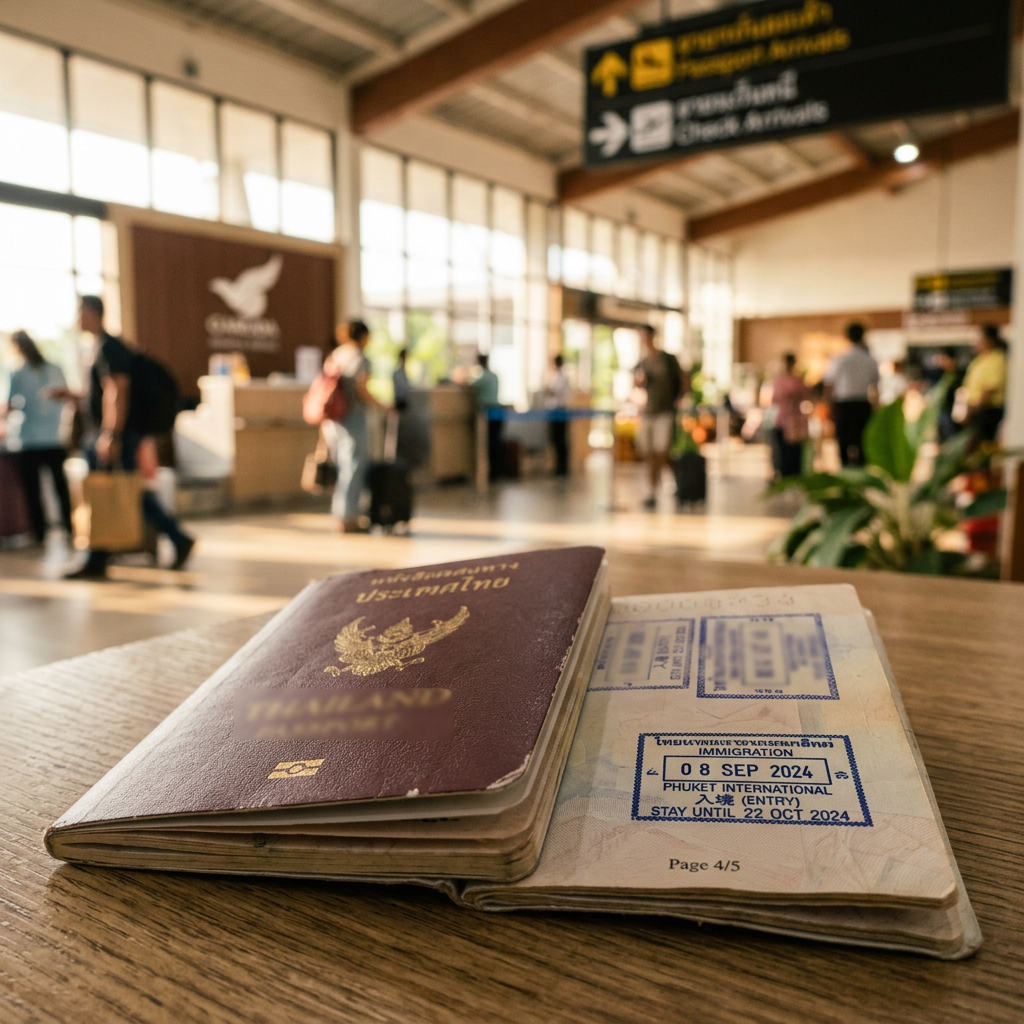
A US citizen who spends a year working from Chiang Mai or Lisbon often runs into the same quiet surprise. A card gets closed for inactivity. A bureau file no longer matches a mailing address, or an application gets denied because no US address exists on file.
Building or keeping a US credit score without a US address is possible. It depends on understanding how credit bureaus, scoring models, and card issuers each treat inactivity and address changes.
The details below reflect issuer support pages, bureau publications, and mail-forwarding provider sites checked in September 2026. Issuer policies shift without much notice, so treat this as current only as of that date.
Credit rules vary by issuer and by individual circumstances. Treat this as background research, not personalized financial advice. Confirm current terms directly with your bank or card issuer before making changes.

Why Leaving the US Complicates Your Credit File
Three separate problems tend to hit at once when a nomad leaves the country for an extended stretch. Existing cards may go unused for months. Issuers sometimes treat that as a signal to close the account.
Meanwhile, a change of mailing address to a foreign country can trigger a manual review. Some banks ask for re-verification at that point.
Applying for new US credit from abroad adds a third layer of difficulty. Most issuers still ask for a US mailing address during underwriting.
As a result, nomads without a domestic address on file may find new applications denied outright, regardless of their credit history. That combination, dormant old accounts plus blocked new ones, is what erodes a credit file over a year or two abroad — not the foreign address itself, but what it triggers on the account-management and underwriting side.
What Actually Affects Your Score: Address vs. Inactivity
It helps to separate two things that get conflated: your mailing address and your credit score. According to Experian’s own consumer education team, address information does not factor into FICO or VantageScore calculations at all.
Scores are built from payment history, amounts owed, length of credit history, credit mix, and new credit activity. In other words, living in Bangkok instead of Boston does not, by itself, lower your score.
The real risk is not the address itself. It’s what an address change or inactivity triggers downstream, in how issuers manage and underwrite the account.
If dormancy leads an issuer to close your only long-standing card, that reduces your total available revolving credit and can raise your credit utilization ratio. Over time, losing your oldest account can also affect the length-of-history factor in your file. Both effects can move your score, according to TransUnion’s own guide on closing accounts.
Equifax’s own consumer guidance on inactive cards adds another risk. Lenders may close paid, inactive accounts without advance notice. A closed account can remain on your credit report for years, depending on how it was reported and the bureau’s own retention rules — this isn’t a fixed, guaranteed countdown.
There’s no single industry rule for how long an account can sit idle before it closes. Equifax notes that timing depends entirely on the individual company’s policy.
Other reporting has found real-world examples ranging from around six months to two or three years, depending on the issuer. “It varies by issuer” is the only honest general answer, so check your specific card’s terms.
How a Few Major Issuers Currently Handle Addresses (Verify Before You Rely on This)
Issuer policies on foreign addresses change without much warning. Treat the following as a starting point for your own verification, not a final answer.
Chase’s published card terms require a valid permanent home address for the card product — the 50 states, Washington D.C., Guam, Puerto Rico, the US Virgin Islands, or a US military address. Confirm directly with Chase how that requirement applies if you’re relocating abroad long-term.
Capital One’s help center explains how to update contact information on an account. It does not publish a blanket policy on foreign residential addresses for personal cards, so a call to confirm your specific situation is worthwhile.
American Express takes a somewhat different approach for people who relocate long-term. Its Global Card Relationship program lets an existing US card member apply for a card with the local Amex entity in certain countries.
That option can help preserve the cardholder’s original membership start date and length-of-relationship history even after a genuine move abroad, according to Amex’s own program page. It’s not a guarantee that your specific score outcome will be identical to staying on the US account. Discover and Citi publish less specific public guidance on foreign residential addresses for personal cards.
Several expat-forum threads describe a common workaround: cardholders keep US cards active by leaving a domestic mailing address on file rather than switching to a foreign one. None of this is guaranteed to hold for your account, since underwriting practices differ by product and change over time.
Practical Ways to Keep a US Credit Score Without a US Address
A few legitimate, commonly used approaches can help a nomad maintain a US credit score without a US address. None of these require lying to a bank about your residency.
The point is to use a real, disclosable US mailing address and to keep at least one account genuinely active. One important distinction before the list: a virtual mailbox solves the mailing-address problem for some accounts, but it does not automatically satisfy a bank’s residential-address requirement. Banks can treat residential, mailing, and billing addresses differently, so confirm with each issuer how they’ll classify the address before relying on it.
- Route US mail through a virtual mailbox with a real street address, not a PO box, such as Traveling Mailbox, US Global Mail, or one of the independently operated locations in the Anytime Mailbox network, then check with your issuer whether that address can be used as a billing or mailing address on your account — it may not satisfy a residential-address requirement even when it’s accepted for billing.
- Keep one no-annual-fee card active with a small recurring charge, like a streaming subscription, so the account shows regular usage instead of sitting dormant for months at a time.
- Look into secured cards aimed at people building or rebuilding credit, though most still require a US residential address plus a Social Security number or ITIN, so confirm eligibility before assuming one works from abroad.
- Ask a trusted family member to add you as an authorized user on a well-managed card. myFICO’s own scoring FAQ confirms that an authorized user’s account age and payment history can appear on your credit file, though not every issuer reports authorized-user activity to all three bureaus, and the effect can be smaller than for the primary accountholder.
Mail-forwarding providers differ enough in price, structure, and coverage that comparing a few is worth doing before picking one. The table below lists three services nomads commonly use, with details pulled from each provider’s own site as of September 2026. Confirm current pricing directly on each provider’s site before signing up, since these plans and rates change.
| Service | Real US Street Address | Starting Price (per provider, Sept 2026) | Best For |
|---|---|---|---|
| Traveling Mailbox | Yes, physical street addresses (not PO boxes) at roughly 45 US locations | Plans start around $15/month, per the provider’s pricing page | Company-operated facilities, useful for consistent scan quality |
| US Global Mail | Yes, a professional US street/business address | Plans start at roughly $49/month, per the provider’s current pricing page | Unlimited exterior scans and free check deposit included on most plans |
| Anytime Mailbox | Yes, real street addresses at thousands of independently run locations | Typically under $10/month at standard locations, more at premium city addresses | Marketplace model — pricing and features vary by individual location operator |
What Not to Do
None of the options above involve lying to a bank about where you live.
Misrepresenting your country of residence to keep a US address on file can violate your cardholder agreement. Depending on the circumstances, providing inaccurate residency information can create serious account or legal problems, so disclose address changes the way your issuer’s terms actually require.
If an issuer’s terms genuinely don’t accommodate your situation, ask directly. Switching to a product that does beats concealing a foreign address.
Keeping a US Credit Score Without a US Address: The Bottom Line
None of these tactics work as a one-time fix. Maintaining a US credit score without a US address generally takes ongoing small maintenance, like a recurring charge or a quarterly login.
Combine a real mail-forwarding address, one lightly used card, and possibly an authorized-user relationship. Many nomads can keep a usable credit file intact for years abroad this way.
Confirm every issuer-specific detail directly with your bank, since terms shift and what’s accurate this month may not hold next year.
Understanding the mechanics above gives you a clearer sense of what’s actually within your control: address versus inactivity versus new-account underwriting.

FAQ
Will moving abroad automatically hurt my US credit score?
Not directly. Experian’s own guidance confirms address information isn’t part of FICO or VantageScore calculations.
However, card inactivity can lead an issuer to close your account. The resulting drop in available credit, and potentially in your average account age, can lower your score indirectly.
Can I open a new US credit card while living abroad with no US address?
It’s difficult with most mainstream issuers. Underwriting for a new personal card typically expects a US mailing address and a US-based credit check.
A mail-forwarding address sometimes works as the billing address once you already hold an account. Many mainstream US card applications ask for a US address, although requirements vary by issuer and product.
How often do I need to use a US card to keep it from being closed for inactivity?
There’s no universal number. Equifax notes that timing depends on each lender’s own policy. Other reporting has found thresholds ranging from around six months to a few years.
A small recurring charge every month or two, such as a cheap subscription, is a simple way to avoid guessing wrong.
Related Reads
- Best Credit Cards for Digital Nomads in 2026, Compared — useful once you’re ready to add or replace a card as part of a credit-maintenance plan.
- US Bank Account Frozen While Traveling: Why & How to Fix It — covers the sibling problem of dormant-account freezes on the banking side.
- Getting US Bank OTP Codes Abroad Without a US SIM (2026) — solves the access problem that often comes up when you’re managing US accounts remotely.
Sources
- Experian — Address Information Does Not Impact Credit Scores
- Equifax — Inactive Credit Card: Use it or Lose it?
- TransUnion — How Closing Accounts Can Affect Credit Scores
- myFICO — How do authorized user accounts impact the FICO Score?
- Chase — Card Pricing and Terms
- Capital One — Updating personal credit card account information
- American Express — Global Card Relationship
- Traveling Mailbox — Pricing
- US Global Mail — Pricing
- Anytime Mailbox — Virtual Address