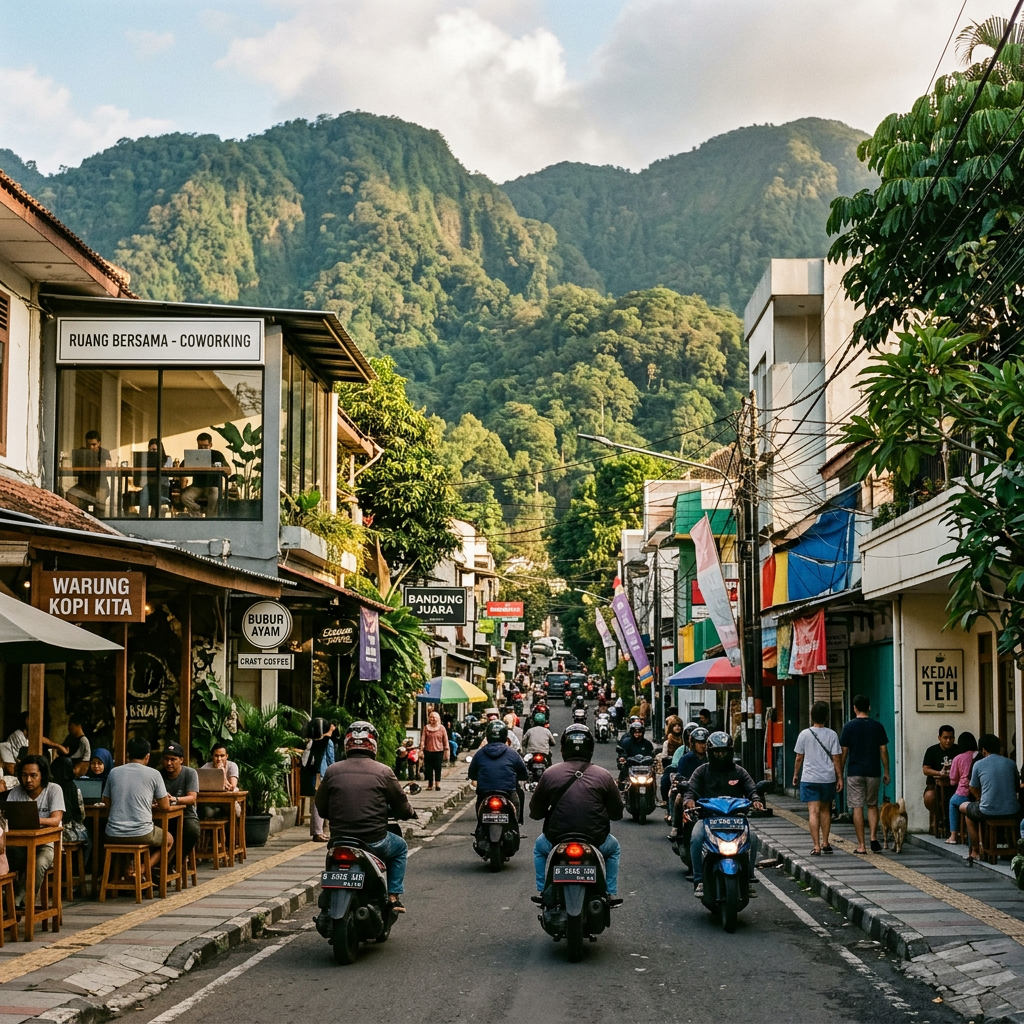
Bali gets the coworking-cafe reputation. Yogyakarta is where a growing number of remote workers are quietly landing instead. Rent is lower, and the pace of life is slower. A Yogyakarta digital nomad often gets more space and fewer tourist crowds for the same budget. This guide covers what a Yogyakarta digital nomad actually pays each month, which visa route fits, and where the wifi holds up under a video call. Figures below reflect pricing as of this writing in July 2026. Treat them as a planning range, since exchange rates and landlord pricing shift month to month.

What Makes Yogyakarta Different From Bali
Yogyakarta is often shortened to “Jogja” by residents. It is a university city on Java, not a beach resort island, and the local economy runs on students, batik workshops, and civil servants rather than tourism alone. That keeps prices lower than Canggu or Ubud. However, the digital nomad scene here is smaller and less English-fluent outside a handful of cafes near Universitas Gadjah Mada. For a Yogyakarta digital nomad who wants immersion in Indonesian daily life plus lower rent, that trade-off is usually worth it. For someone who wants a built-in international social calendar every night, Bali is still the easier pick.
Monthly Cost of Living for a Yogyakarta Digital Nomad
Cost-tracking sites like Numbeo and the community database at Nomads.com track expat and remote-worker spending here closely. They generally place a single person’s monthly budget between roughly $520 and $975. Housing is the biggest factor behind that range, along with how often meals come from western-style restaurants versus local warungs. That range sits below Bali’s typical $1,200 to $1,800 nomad budget, and it also roughly matches or undercuts Chiang Mai. The table below breaks the estimate into categories, using the low and high figures reported across these trackers as of mid-2026.
| Expense | Budget Estimate (Monthly, USD) | Comfort Estimate (Monthly, USD) |
|---|---|---|
| 1-bedroom apartment | $160-$220 | $300-$450 |
| Food (mixed local/western) | $120-$180 | $250-$350 |
| Utilities (electricity, water) | $50-$72 | $80-$100 |
| Coworking membership | $40-$80 | $100-$150 |
| Local transport | $25-$40 | $60-$90 |
These are averages pulled from crowd-reported cost trackers, not a controlled survey. Treat them as a planning range instead of a fixed quote. Rent in particular varies widely by district, which is covered in more detail below.
Internet Speed and Coworking Spaces
Community-reported residential broadband speeds in Yogyakarta vary widely, but entry-level plans often clock in at single-digit Mbps according to nomad cost-of-living trackers. That is workable for email and browsing, but it may be limiting for frequent video calls on a shared connection. Coworking spaces close that gap. Venues clustered around Jalan Kaliurang and the Sleman district typically advertise 50 to 100 Mbps fiber connections, and the city has a growing number of dedicated coworking venues to choose from. For a Yogyakarta digital nomad who relies on client calls, budgeting for a coworking day pass is the safer plan. Most spaces also sell single-day access for around $5 to $10, so a monthly plan is not required right away.
Visa Options for Remote Workers
Indonesia does not issue a visa specifically labeled for a Yogyakarta digital nomad. The same national permits that apply in Bali or Jakarta apply here too, since Indonesian immigration rules work at the country level. Two realistic routes exist for a long stay: the E33G Remote Worker Visa and the Second Home Visa. The E33G is officially the Visa Rumah Kedua Pekerja Jarak Jauh, listed on the Directorate General of Immigration’s evisa.imigrasi.go.id portal. It requires an employment or client contract with a company based outside Indonesia, plus proof of income. It grants a one-year stay that can typically be renewed, but it does not permit working for Indonesian clients or employers. The Second Home Visa, by contrast, is built around a financial deposit rather than remote employment, and suits nomads who want a longer runway without renewing annually. Our separate E33G visa breakdown and Second Home Visa comparison cover the paperwork and income thresholds for each in full. Visa rules change, and individual circumstances vary by nationality and income source. Confirm current requirements directly with Indonesian immigration or a licensed visa agent before booking a flight.
Where to Base Yourself in Yogyakarta
Most Yogyakarta digital nomad arrivals land in one of three areas. Jalan Kaliurang stretches north from the ring road toward Merapi volcano. It has the highest concentration of coworking spaces, cafes, and student-friendly rentals, which makes it the default choice for a first stay. Prawirotaman, south of the city center, leans more toward guesthouses and a slower, older-town feel. It tends to attract nomads who want walkable streets over coworking density. Sleman regency, further out, offers newer apartment complexes at a discount for anyone comfortable with a longer motorbike commute. The city is compact enough to change neighborhoods without much disruption, so switching mid-stay is a realistic option if the first choice does not fit.
Safety, Culture, and Practical Notes
For a Yogyakarta digital nomad weighing safety, the city is generally considered low-crime by regional standards. Petty theft risk mirrors what most SEA travelers already prepare for elsewhere: watch bags on motorbikes, avoid flashing electronics late at night, and use registered taxi apps. Air quality can dip during the dry season, roughly June through October, due to regional haze, so nomads with respiratory sensitivity may want to check daily indexes before committing to a long stay. English fluency is lower here than in Bali’s expat hubs, and a basic grasp of Bahasa Indonesia noticeably smooths daily errands like grocery shopping or scheduling repairs. Many remote workers find the lower costs and quieter environment worth the initial adjustment.
Best Time of Year and Getting There
The dry season, roughly May through September, is generally the most comfortable stretch for a Yogyakarta digital nomad. Rain is less likely to disrupt day trips to Borobudur, Prambanan, or the surrounding volcanic hills. The wet season, from November through March, brings heavier afternoon downpours. Temperatures stay warm year-round either way, and indoor coworking work is unaffected. Yogyakarta International Airport (YIA), in Kulon Progo, is the city’s main gateway and connects to Jakarta, Bali, and several other Indonesian hubs with frequent daily flights. The older in-town Adisutjipto Airport (JOG) mostly handles domestic and military traffic today, since commercial flights shifted to YIA back in 2020. A budget domestic ticket from Jakarta can sometimes cost well under $100 one way when booked a few weeks ahead, though prices vary by season and airline. For a Yogyakarta digital nomad already based in Bali or Jakarta, that makes it an easy add-on stop rather than a separate trip requiring a new international flight.

Frequently Asked Questions
Is Yogyakarta cheaper than Bali for digital nomads?
Generally, yes. Cost trackers put a single person’s monthly budget in Yogyakarta roughly 30 to 50 percent below typical Bali nomad spending. The gap comes mainly from lower rent and cheaper coworking fees outside the island’s tourist-driven property market.
Do I need a special visa to work remotely from Yogyakarta?
You need a valid Indonesian visa that permits your intended length of stay, such as the E33G Remote Worker Visa or the Second Home Visa. A standard tourist visa may not be appropriate for ongoing remote work and can carry compliance risk. Confirm current requirements with Indonesian immigration before applying, since rules and income thresholds change.
Is the internet in Yogyakarta reliable enough for video calls?
Home broadband alone is often marginal, with community-reported residential speeds varying widely and often landing in the single digits for entry-level plans. Coworking spaces are the more dependable option. Many advertise 50 to 100 Mbps fiber connections that hold up better under a full day of calls.
Related Reads
- Bali Cost of Living for Digital Nomads in 2026 – the higher-priced Indonesian benchmark most nomads compare Yogyakarta against.
- Kota Kinabalu Digital Nomad Cost – another lower-cost, lower-profile SEA base worth cross-checking against Jogja’s budget.
- Kuching Digital Nomad Guide – a similarly quiet, non-beach alternative city for nomads who want lower rent over nightlife.