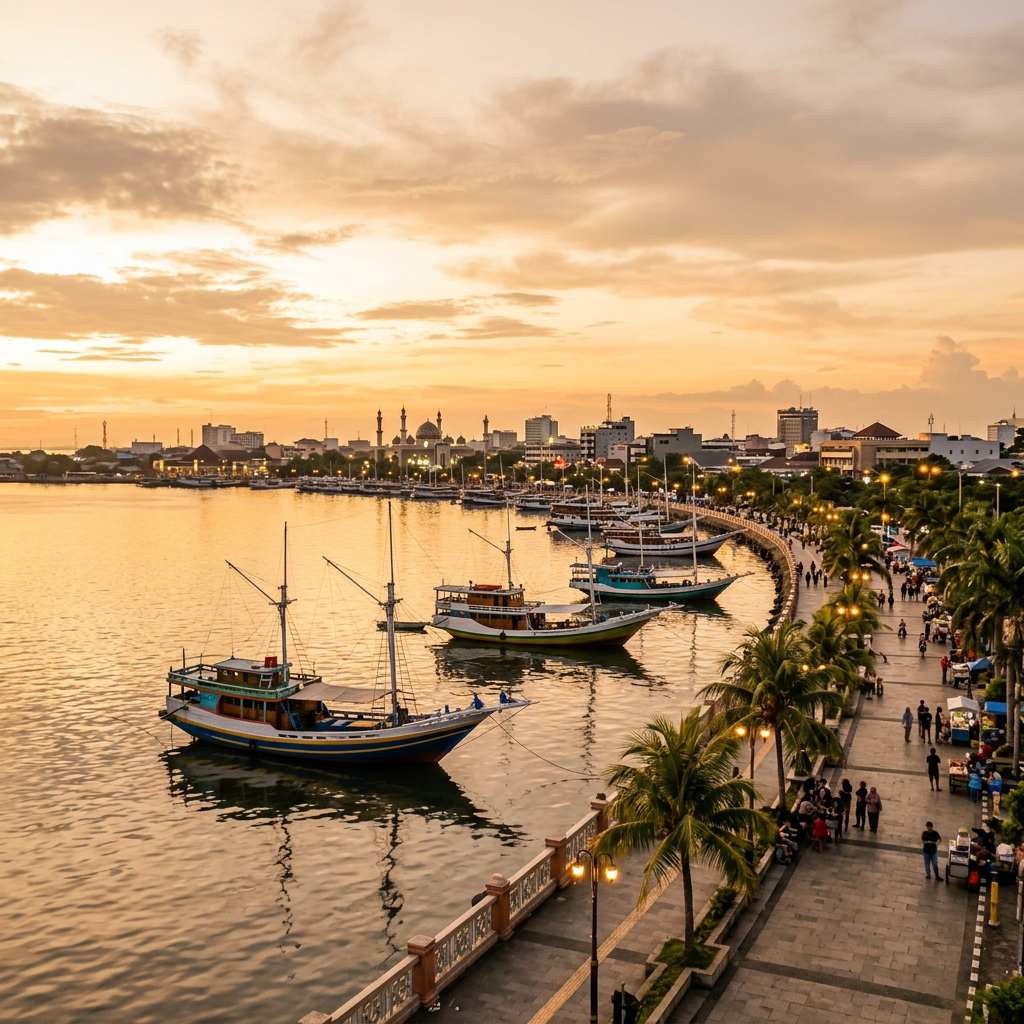
Many guides point Kota Kinabalu digital nomads toward Malaysia’s DE Rantau pass without noting that Sabah isn’t on its hub list. That gap affects how you plan a long stay here. This guide covers 2026 costs, internet speeds, and the visa gap that catches first-time visitors to Sabah’s capital.

Kota Kinabalu Digital Nomad Costs in 2026
According to Numbeo’s Kota Kinabalu cost-of-living data (last updated 19 June 2026), a one-bedroom apartment in the city centre generally averages RM1,760 a month. The typical range runs RM1,200 to RM3,000. Outside the centre, the same unit drops to roughly RM775, typically RM600 to RM1,390. Suburbs such as Penampang, Putatan, and Menggatal generally fall toward the lower end, while sea-view units in Likas and the city core sit toward the top.
Generally, daily costs stay modest outside rent. A basic meal at an inexpensive restaurant runs about RM15. A mid-range dinner for two costs around RM80. Groceries follow the same pattern: a dozen eggs cost roughly RM10.95, and a pound of chicken fillets runs about RM6.80. Monthly utilities for a standard apartment average RM282.99, and a mobile plan with 10GB or more of data costs around RM38.57.
| Monthly Cost Category | Typical Range (RM) |
|---|---|
| 1BR apartment, city centre | RM1,200–3,000 |
| 1BR apartment, outside centre | RM600–1,390 |
| Groceries + eating out (1 person) | RM1,000–1,600 |
| Broadband internet (60 Mbps+) | RM50–215 |
| Mobile plan (10GB+ data) | RM20–40 |
Add it up, and a single Kota Kinabalu digital nomad in a city-centre one-bedroom can generally expect a total monthly budget between RM3,300 and RM4,800. That figure sits close to the range in our Kuching digital nomad guide for East Malaysia’s other main hub, though Kuching’s rent runs slightly lower on average. Crowd-sourced trackers also generally put Kota Kinabalu rent below Kuala Lumpur’s, while groceries can run higher, since Sabah imports more goods by sea.
Internet Speed in Sabah
Malaysia’s national median fixed broadband download speed sits at 169.89 Mbps, per the Ookla Speedtest Global Index (46th globally), with 66.10 Mbps upload and 8 ms latency. However, that figure blends Peninsular Malaysia with East Malaysia. Sabah trails the national number by a wide margin. Industry coverage of Telekom Malaysia’s JENDELA rollout puts typical Sabah and Sarawak median speeds around 40–70 Mbps, well below the national figure. The gap is narrowing as fiber infrastructure expands, though. Treat the national figure as a ceiling, not a promise, for any specific address in Kota Kinabalu.
Speeds in that range are generally adequate for typical remote work, including video calls. Numbeo’s data shows advertised broadband plans of 60 Mbps or higher averaging RM112.33 a month, and coworking spaces in the city generally advertise connections suited to video calls. Mobile coverage, however, can weaken outside the urban core, so travelers headed toward Kinabalu Park or the coastal fringes should not rely on a phone hotspot for client calls.
The DE Rantau Visa Gap: What Most Guides Get Wrong
Two separate issues tend to catch first-time visitors off guard here, and they are easy to confuse with each other.
First, Sabah runs its own immigration control, separate from Peninsular Malaysia. This dates back to the terms of Sabah’s 1963 entry into the Malaysian federation. As a result, every traveler arriving in Kota Kinabalu clears a separate passport check. This applies even to flights from Kuala Lumpur that look purely domestic. Neighboring Sarawak runs its own autonomous entry control too, as our Kuching guide explains. Carry your passport, not just a national ID, for the Sabah leg of any Malaysia trip. Citizens of the United States, the United Kingdom, most EU countries, Canada, Australia, and New Zealand can generally enter visa-free for up to 90 days, per the Malaysian Immigration Department’s official visa requirement list. This covers tourism purposes. It does not explicitly authorize local employment. Working remotely for a foreign employer sits in a legal gray area Malaysia has not clearly regulated for short tourist stays.
Second, Malaysia’s official DE Rantau Nomad Pass does not cover Sabah. According to MDEC’s DE Rantau program materials, including its FAQ (version 10, 28 August 2026), the pass applies to Peninsular Malaysia and Labuan only. Entry to Sabah or Sarawak is on a tourist pass, and a separately branded DE Rantau Sarawak pass covers that state. A 2023 report from the Borneo Post described MDEC discussions to extend the program to Sabah, but no launch has appeared on MDEC’s official channels since. Anyone who wants a clearly defined long-stay status in Sabah therefore has to look at Malaysia’s broader MM2H program instead. Our Malaysia MM2H visa guide covers that program in detail. Last checked October 13, 2026.
Because MDEC’s hub list can change without much notice, confirm current DE Rantau coverage directly on MDEC’s website before you plan a long stay around it.
Coworking, Safety, and Daily Life
Kota Kinabalu’s coworking scene is smaller than Kuala Lumpur’s or Penang’s. Even so, it covers the basics. Day passes generally run RM40–50. Monthly memberships typically fall between RM200 and RM450. International chains like Regus price higher, around RM575–679 a month. Kinabalu Coders is a frequently mentioned community-oriented space for travelers who want a fixed desk without a corporate office feel.
On safety, Kota Kinabalu is generally regarded as calmer than many larger Southeast Asian hubs. Violent crime against visitors is uncommon in the central tourist areas. However, petty theft and motorcycle bag-snatching are commonly reported around crowded markets like the Filipino Market and the Gaya Street Sunday Market, so keep bags and phones out of easy reach there. Standard precautions, such as avoiding poorly lit back streets at night and checking weather and operator details before boat trips, cover most everyday risks.
Should You Base Yourself in Kota Kinabalu?
Kota Kinabalu suits a specific kind of nomad. It works for someone who wants beach access, hiking trails toward Mount Kinabalu, and lower rent than Kuala Lumpur. It works even better for someone who doesn’t need a large, established nomad community to feel settled. However, it does not suit someone chasing fast mobile internet everywhere. It also does not suit someone who needs a legally airtight long-stay visa pathway, since the DE Rantau gap leaves that group with fewer options than Peninsular hub cities offer.
As a practical next step, book a short-term rental for your first two weeks. Avoid committing to a long lease right away. This lets you test the actual internet speed at a specific address. It also lets you visit a coworking space in person and confirm your visa runway before you plan anything longer than a 90-day tourist stay.
Information in this guide was last checked October 13, 2026. Prices, visa rules, and DE Rantau hub coverage can change. Confirm current figures with Numbeo, MDEC, or the Malaysian Immigration Department before finalizing travel plans. This is general information, not legal or immigration advice, so confirm your specific situation with the relevant Malaysian authorities before you travel.

FAQ
Is Kota Kinabalu covered by Malaysia’s DE Rantau digital nomad pass?
No. MDEC’s DE Rantau FAQ (version 10, 28 August 2026) says the pass applies to Peninsular Malaysia and Labuan only, and Sabah and Sarawak entry uses a tourist pass. Sarawak has its own separately branded DE Rantau Sarawak pass, while Sabah has none. A 2023 report described plans to extend the program there, but MDEC’s site does not show a Sabah launch, so confirm current coverage directly with MDEC before applying.
How much does a digital nomad need to live in Kota Kinabalu?
Per Numbeo’s data, a single Kota Kinabalu digital nomad renting a city-centre one-bedroom can generally expect a total monthly budget between roughly RM3,300 and RM4,800. That figure covers rent, food, utilities, and mobile data. However, choosing an apartment outside the city centre, in areas like Penampang or Putatan, can lower it meaningfully.
Do I need a separate passport check to enter Sabah from Peninsular Malaysia?
Yes. Sabah runs its own immigration control, separate from Peninsular Malaysia. Every traveler clears a distinct passport check on arrival in Kota Kinabalu, even when flying in from Kuala Lumpur or Penang. Carry your passport, not just a national ID or boarding pass, for this leg of any Malaysia trip.
What should I do if DE Rantau isn’t available in Kota Kinabalu?
There is no direct substitute today. Eligible nationalities can still enter visa-free for up to 90 days for tourism, but that status does not explicitly authorize local employment. For a clearly defined long-stay work pathway, look at Malaysia’s broader MM2H program instead, or consider a certified DE Rantau hub city like Penang or Kuala Lumpur if holding a formal nomad pass matters more than being based in Sabah specifically. Confirm current DE Rantau hub coverage directly on MDEC’s website before planning around it, since the list can change without much notice.
Related Reads
- Kuching Digital Nomad Guide 2026: New Sarawak Pass & Cost — East Malaysia’s other main hub, with the same Sarawak-style separate immigration check.
- Malaysia MM2H Visa 2026 — the long-stay route this guide points to while Sabah has no DE Rantau pass.
- Penang Digital Nomad Guide 2026: Cost, Coworking, Visa — a certified DE Rantau hub city for readers who want that visa pathway instead.
Sources
- Numbeo, Cost of Living in Kota Kinabalu (last updated 19 June 2026)
- Ookla, Speedtest Global Index — Malaysia
- Malaysia Digital Economy Corporation (MDEC), DE Rantau Official Program Page
- Malaysian Immigration Department, Visa Requirement by Country
- The Borneo Post, “MDEC to extend De Rantau digital nomad hub to S’wak, Sabah” (4 October 2023)