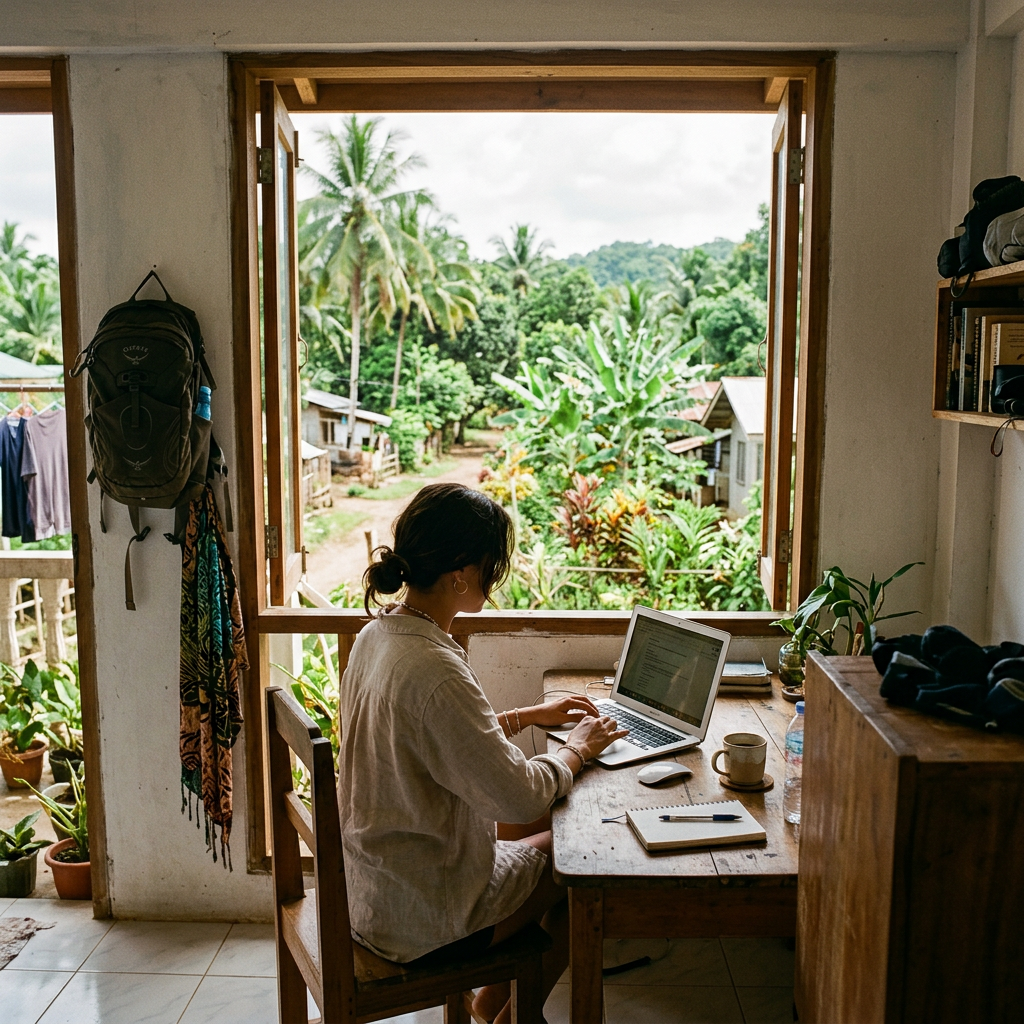
The South Korea digital nomad visa, officially the F-1-D “Workation” visa, spent two and a half years as a little-known pilot program. That changed on June 30, 2026. The Ministry of Justice moved it into permanent operation.
The maximum stay is longer now. For some applicants, the income bar is meaningfully lower too. If Korea was not on your list before, the new rules deserve a second look, especially for people willing to live outside Seoul.
This article reflects the Ministry of Justice’s program announcement and independent legal-industry reporting. It is confirmed as of this writing, late August 2026, most recently checked. Immigration rules change quickly, so verify current figures with the Korea Immigration Service (hikorea.go.kr) or a Korean consulate before applying.

What Changed for the South Korea Digital Nomad Visa on June 30, 2026
The F-1-D visa launched as a trial program on January 1, 2024. It targets foreign remote workers employed by, or owning, a company based outside Korea. According to the Ministry of Justice’s program outline, 743 digital nomad visas were issued between January 2024 and May 2026.
About 398 holders were registered as residents as of May 2026. Roughly 85% of them were concentrated in Seoul, Gyeonggi Province, or Incheon.
That concentration is the reason the permanent program looks different from the pilot. Two changes stand out for anyone researching the South Korea digital nomad visa today.
The maximum stay grew from two years to three. The income requirement now depends on the applicant’s age and location, not a single flat number.
The New Tiered Income Requirement
During the pilot, every applicant needed income of at least twice Korea’s per-capita Gross National Income, or GNI. The Bank of Korea announces that figure every year. Under the permanent program, the multiplier now varies by age and location.
Using the 2025 per-capita GNI of approximately KRW 52.41 million, the published thresholds for a single applicant look like this.
| Age | Seoul Metropolitan Area | Non-Metropolitan / Population-Decline Areas |
|---|---|---|
| 18–34 | 1.5x GNI (approx. KRW 78.6 million) | 1x GNI (approx. KRW 52.4 million) |
| 35 or older | 2x GNI (approx. KRW 104.8 million) | 1.5x GNI (approx. KRW 78.6 million) |
An 18-to-34-year-old willing to live in a non-metropolitan or population-decline area can qualify at roughly half the pilot-era income requirement. Applicants bringing a spouse or children lose some of that discount.
Family units in the Seoul metropolitan area face a flat 2x GNI, regardless of age. Family units outside it face 1.5x GNI instead.
Applicants relying on the regional discount need to document their intended residence. Acceptable proof includes a lease of at least one month, or confirmation from a specialized workation facility. The lower rate is tied to actually living there, not just claiming it on paper.
Stay Length and Basic Eligibility
The visa now runs for an initial one-year period. One-year extensions are available up to a three-year maximum, up from two years under the pilot. Core eligibility is otherwise similar to before.
Applicants must be 18 or older. They must be employed by, or own, a company based outside Korea, and be able to work remotely. At least one year of experience in the same field is required.
Local employment and profit-making activity inside Korea remain restricted, as with nearly every digital nomad visa worldwide. Private medical insurance of at least KRW 100 million, covering treatment and repatriation, is still required.
Some short-term visa holders already in Korea, on B-1, B-2, or C-3 status, can apply to change status to F-1-D without leaving the country. The underlying income and eligibility requirements still apply either way.
Why the Government Made This Change
The Ministry of Justice has framed the redesign as a regional-development tool, not just an immigration update. Roughly 85% of pilot participants clustered in the capital region. A lower income bar outside Seoul is a direct incentive to spread remote workers, and their spending, elsewhere.
That framing matters for applicants weighing where to live. Choosing a population-decline area is not just cheaper rent. Under the new rules, it can decide whether you qualify for the visa at all.
How Korea Compares to Nearby Visa Options
Korea’s regional income discount is unusual among Asian remote-work visas. Thailand’s LTR visa applies a single income threshold nationwide, with no discount for living outside Bangkok. Korea is effectively betting that regional discounts will do more for its economy than a single national number.
The three-year cap puts Korea roughly in the middle of the pack. It beats many one-year renewable programs, but falls short of the multi-year tracks some European nomad visas offer. Korea’s appeal now depends heavily on whether a non-metropolitan posting actually fits your job and lifestyle.
Who the South Korea Digital Nomad Visa Actually Suits
The tiered income rule makes this visa a much better fit for some remote workers than others. A younger freelancer or salaried employee already earning above the 1x GNI threshold, and open to living outside the capital, gets the clearest win. The regional discount effectively pays for a lower cost of living twice over: cheaper rent, and an easier income bar to clear.
Older applicants, or anyone bringing family, should run the numbers before assuming Korea is affordable. A 40-year-old applicant with a spouse and child, planning to live in Seoul, faces the full 2x GNI threshold with no regional discount available. That applicant may find Thailand’s LTR visa or a European program a more realistic income match.
Tax residency is a separate question the visa itself does not answer. Staying in Korea long enough on an F-1-D visa can trigger Korean tax residency rules independent of your visa status, so anyone planning a multi-year stay should get country-specific tax advice before committing, not after arriving.
What to Verify Before Applying
- Confirm the current year’s Bank of Korea per-capita GNI figure; the thresholds above are based on the 2025 figure and update annually.
- Confirm your intended city or region is officially classified as non-metropolitan or population-decline for visa purposes; this is not the same as simply living outside Seoul city limits.
- Confirm current required documents and insurance minimums directly with hikorea.go.kr or your nearest Korean consulate, since immigration policy pages update faster than most third-party guides.
Individual circumstances vary by nationality, employer structure, and family situation. Treat this as a starting point, and confirm specifics with an official source before booking travel or signing a lease.

Frequently Asked Questions
When did Korea’s digital nomad visa become permanent?
The Ministry of Justice moved the F-1-D Workation visa into permanent operation on June 30, 2026. That followed roughly two and a half years of trial operation starting January 1, 2024.
How long can I stay in Korea on the F-1-D visa now?
Up to three years total: an initial one-year grant, followed by one-year extensions. That is up from a two-year maximum under the pilot program.
Does the F-1-D visa lead to permanent residency in Korea?
No. The F-1-D remains a temporary status for remote work tied to an overseas employer. It has a three-year cap and no built-in path to permanent residency.
Related Reads
- Vietnam UĐ1 Visa 2026: Who Really Qualifies (Not All Nomads) — a reminder that not every Asian “remote work” visa headline is actually open to freelancers or remote employees.
- Thailand LTR Visa 2026: Requirements, Cost & Timeline — a comparison point for income-based long-stay visas in the region.
Sources
- Republic of Korea Ministry of Justice, Official announcement on the 2026 Digital Nomad (Workation) Visa program changes (primary government source)
- Pureum Law Office, F-1-D Digital Nomad Visa Korea Officially Launches: What Changed on June 30, 2026 (independent legal-industry summary of the Ministry of Justice announcement)
- Embassy of the Republic of Korea to Canada, [F-1-D] Workation (Digital Nomad) Visa (official consular page, base program terms)
Visa and income figures change annually and by nationality. This article covers general terms only. Confirm current requirements with the Korea Immigration Service or a Korean consulate before applying.